
A New Way to “Trick” Your Brain During a Workout

If you’ve ever stopped mid-workout thinking, “Why does this feel so hard today?” — science says that feeling isn’t just coming from your muscles or lungs.
A growing body of research suggests that how hard exercise feels is partly constructed in the brain, and researchers may have found a new way to temporarily influence that perception.
Recently, a study making the rounds online hinted at a potential “brain trick” that allowed people to work harder without feeling like they were working harder. Naturally, the internet ran with it. But what did the science actually show — and does it apply to real life (or the vibration plates all over social media)?
Let’s break it down.

The Study That Sparked the Buzz
In a recent study, researchers investigated whether altering sensory feedback from muscles to the brain could change how hard exercise feels.
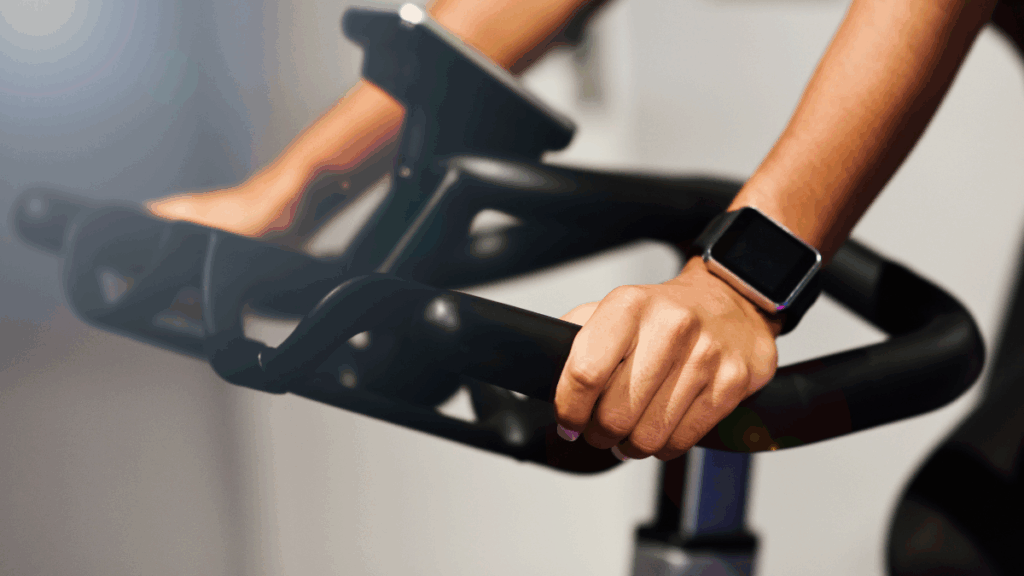
Before the short cycling bouts, researchers applied gentle vibrations to the Achilles and knee tendons — key areas packed with sensory receptors that send movement and force signals to the brain. After this stimulation, participants cycled at set intensities for several minutes.
The surprising finding: participants’ muscles and cardiovascular systems were working harder — generating more power and higher heart rates — but they didn’t feel any tougher effort. In other words, their bodies were putting in extra work, yet their brains didn’t perceive the exercise as more difficult.
Why Perceived Effort Isn’t Just About Muscles
Perceived exertion — often measured with the Borg Rating of Perceived Exertion (RPE) scale, which lets people rate how hard exercise feels on a scale from 6 (“no exertion”) to 20 (“maximal effort”) — isn’t simply a reflection of heart rate or muscle fatigue. It’s a central brain process that integrates signals from muscles, joints, breathing, and even expectations.
Functional neuroimaging shows that multiple brain regions, including motor and sensory cortices, work together to construct the sensation of effort during activity, with activation patterns shifting as exertion increases.
In the recent tendon vibration study, altering sensory feedback likely changed how the brain interpreted these signals, effectively adjusting the body’s “read” on how demanding the exercise felt.

Find Your Perfect Workout

Does This Mean Exercise Can Be Made Effortless?
Not quite.
This research was a short-duration, tightly controlled laboratory experiment, designed to explore mechanisms — not offer a ready-to-use fitness solution. The vibration was precise, localized, and applied before exercise, not during it.
There’s currently no consumer device shown to replicate this exact effect in everyday workouts, and the researchers themselves frame this as a proof-of-concept rather than a performance hack.
Still, it reinforces something important: perception plays a major role in how tolerable exercise feels, which can influence motivation and consistency.
What About Vibration Plates on Social Media?
It’s tempting to connect this tendon vibration research to the whole-body vibration (WBV) platforms trending on TikTok and Instagram — but they’re not the same. WBV platforms stimulate the entire body at once, rather than targeting specific sensory pathways in muscles and tendons.
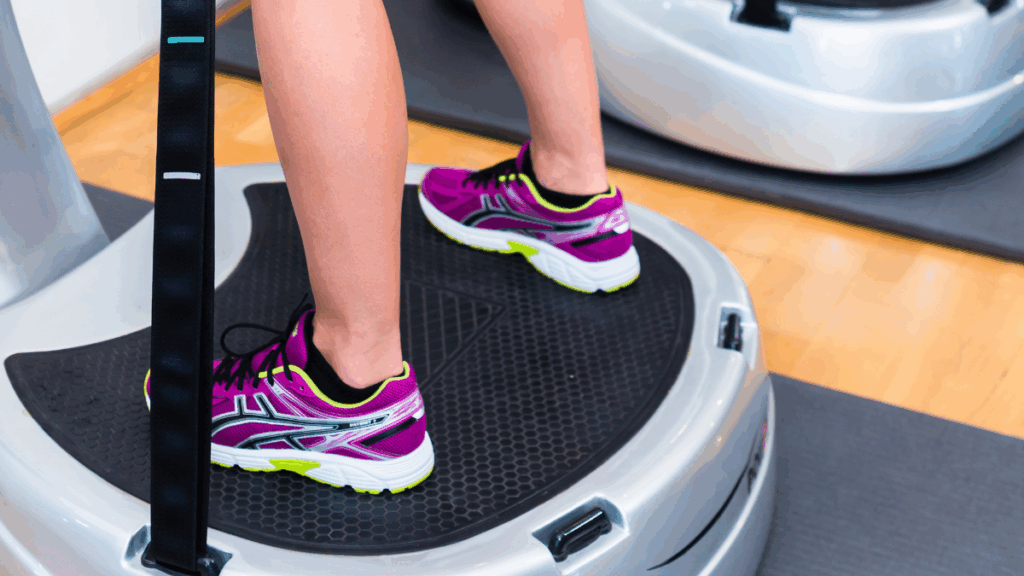
Studies on WBV show mixed results. Some report small improvements in muscle activation, balance, or strength when vibration is added to exercise, while others show higher perceived effort rather than less.
For example, one study found that vibration-assisted squats increased both energy expenditure and perceived exertion and another confirmed higher exertion ratings during WBV exposure.
Bottom line: while vibration plates may have niche applications in rehab or strength training, there’s no strong evidence that they “trick” the brain into making workouts feel easier like the tendon-specific lab method did.
What Actually Helps Exercise Feel Easier (According to Research)
Research shows that perceived effort isn’t just about muscles or heart rate — a variety of factors can reliably make exercise feel easier.
Environment matters: walking outdoors or in immersive settings often feels less strenuous than the same activity indoors, even when the physiological workload is the same.
Cognitive engagement helps too: visually engaging or immersive exercise experiences can reduce perceived exertion without lowering actual work. Try it out by watching your fave TV show on the treadmill or listening to a fave podcast as you strength train.
Psychological factors play a role as well. Confidence, expectations, and self-efficacy consistently influence how hard exercise feels and whether people stick with it over time. Positive self-talk for the win! (Fake it till you make it!)
Together, these findings reinforce a key point: how hard a workout feels is shaped by the brain as much as the body.
The Bigger Takeaway
This new research doesn’t mean there’s a shortcut to effortless workouts. But it does strengthen a powerful idea: perceived effort is flexible, and the brain plays a starring role in how movement feels.
Instead of chasing hacks or gadgets, the most effective ways to make exercise feel more doable are still grounded in well-established science — enjoyment, confidence, environment, and gradual progression.
The brain may not be easily “tricked,” but it can be supported — and that might be the most sustainable strategy of all.
Morning Report Podcast
A short-and-sweet minute morning episode Monday-Friday covering all 3 daily news stories. Exclusively in the Looli App.