
Post‑Meal Movement: The Ticket to Better Blood Sugar
When many people think about managing blood sugar, they focus on what to eat (or not eat). But there’s another factor that’s just as important — and it has nothing to do with what’s on your plate or even what you do during the meal.
A few minutes of post-meal movement can help manage blood sugar by roughly 20–40% in as little as three minutes, and even greater reductions can be achieved with slightly longer activity.

What is Blood Sugar?
Blood sugar, or glucose, is the sugar that comes from the foods you eat, especially carbohydrates. It’s your body’s main fuel, providing energy for your muscles, brain, and other organs. After you eat, glucose enters your bloodstream, and your body responds by releasing insulin, a hormone that helps move glucose into your cells to be used for energy.
Why a Rising Blood Sugar Isn’t Bad
It’s normal for blood sugar to rise after a meal — that’s exactly what it’s supposed to do. The key is balancing that rise so it doesn’t spike too high, stays steady, and provides sustained energy. Repeated large spikes in blood sugar over time are linked to metabolic stress and may increase risk for type 2 diabetes or cardiovascular issues.
For most people, the body manages these post-meal rises just fine. But for those with blood sugar concerns — or anyone looking to optimize energy and prevent large peaks — a bit of movement right after eating can make a meaningful difference.
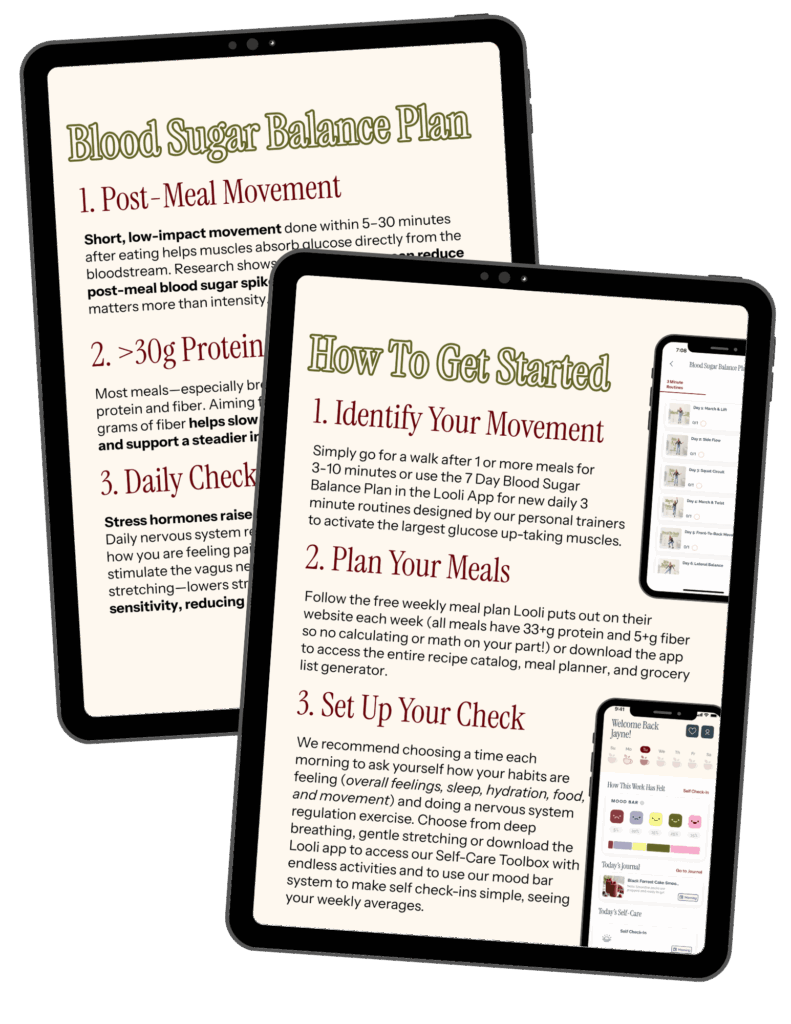
Balance Your Blood Sugar
A simple, 3-step system designed by dietitians and personal trainers to help you feel more stable, energized, and supported in your body.
If blood sugar feels confusing, frustrating, or like something you should worry about one day — this plan meets you where you are.
Why Post-Meal Movement Helps
When your muscles contract during movement, they take up glucose directly from your blood, using it for energy. This happens regardless of insulin sensitivity, meaning it works for nearly everyone, even if your body isn’t perfectly efficient at managing glucose yet.
Even short bouts of movement — just a few minutes — can help:
- Reduce the peak rise in blood sugar
- Support steadier energy levels after eating
- Train your body over time to manage glucose more efficiently
Research shows:
- 3 minutes of stair climbing or walking immediately after a meal reduces peak glucose by ~20–40%.
- Longer bouts, like 10 minutes, reduce peak glucose even more (~50–70%) and lower total 2-hour glucose exposure.
This means even a very short routine is effective, and repeating it or extending the time can give added benefit.
It can be as simple as stepping outside for a short walk after your meal. Besides helping your muscles use glucose, getting fresh air has its own benefits: it can boost mood, reduce stress, and support alertness, all of which contribute to feeling more energized after eating. For many people, this is the easiest and most enjoyable first choice.
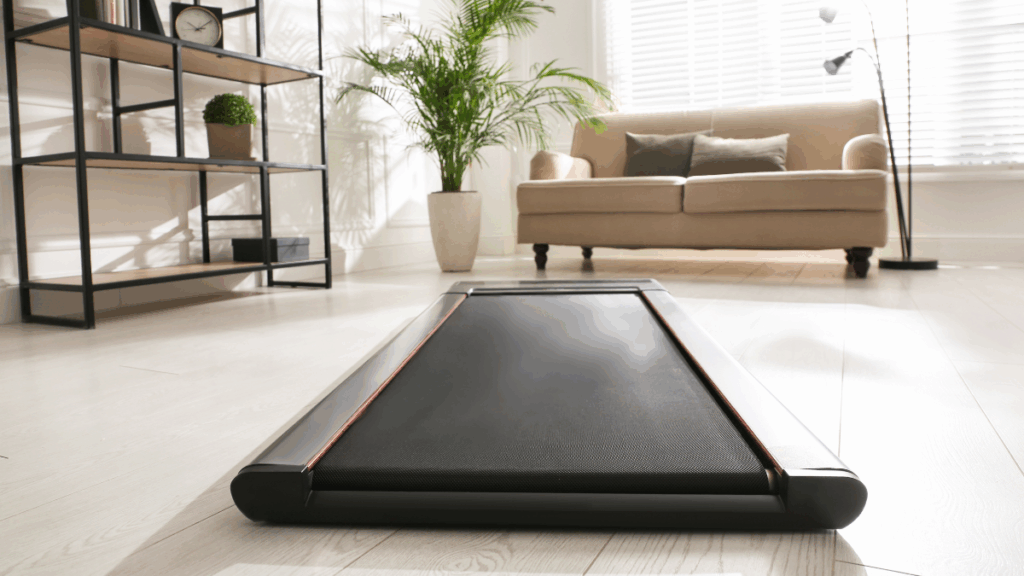
If stepping outside isn’t convenient, you can achieve similar benefits indoors with a walking pad/treadmill or a few simple movements that activate your legs and glutes. The key is gentle, continuous movement that engages large muscle groups for a few minutes right after eating.
Timing:
- Start 5–30 minutes after finishing a meal
- 3 minutes total is effective; repeating up to 3× (≈9 minutes) gives added glucose-lowering benefit
A Sample 3-Minute Routine

Do each move for 1 minute:
- March in Place – lift knees comfortably, swing arms. (Activates quads, glutes, hip flexors; ramps up glucose uptake.)
- Standing Knee Lifts – lift one knee at a time toward hip. (Engages hip flexors and core while maintaining rhythm.)
- Heel Raises – rise onto toes and lower slowly. Optionally, add a small squat as you lower heels. (Activates calves; supports glucose disposal and circulation)
Repeat the circuit once or twice more if desired (total 6–9 minutes) to maximize blood sugar benefits.
What You’ll Feel
Even after the first week, many people notice:
- More energy and alertness after meals
- Less post-meal sluggishness
- Improved digestion and reduced bloating
- A sense of stability in energy levels through the afternoon
Over time, consistent post-meal movement can help your body manage glucose more efficiently, making it easier to maintain steady energy, support metabolic health, and feel better after meals overall.
Looking for more ways to manage blood sugar? Enroll in our 7 Day Blood Sugar Balancing Plan for tailored movement routines & meal planning. Click here to download the Looli app and snag a limited free 7 day pass.
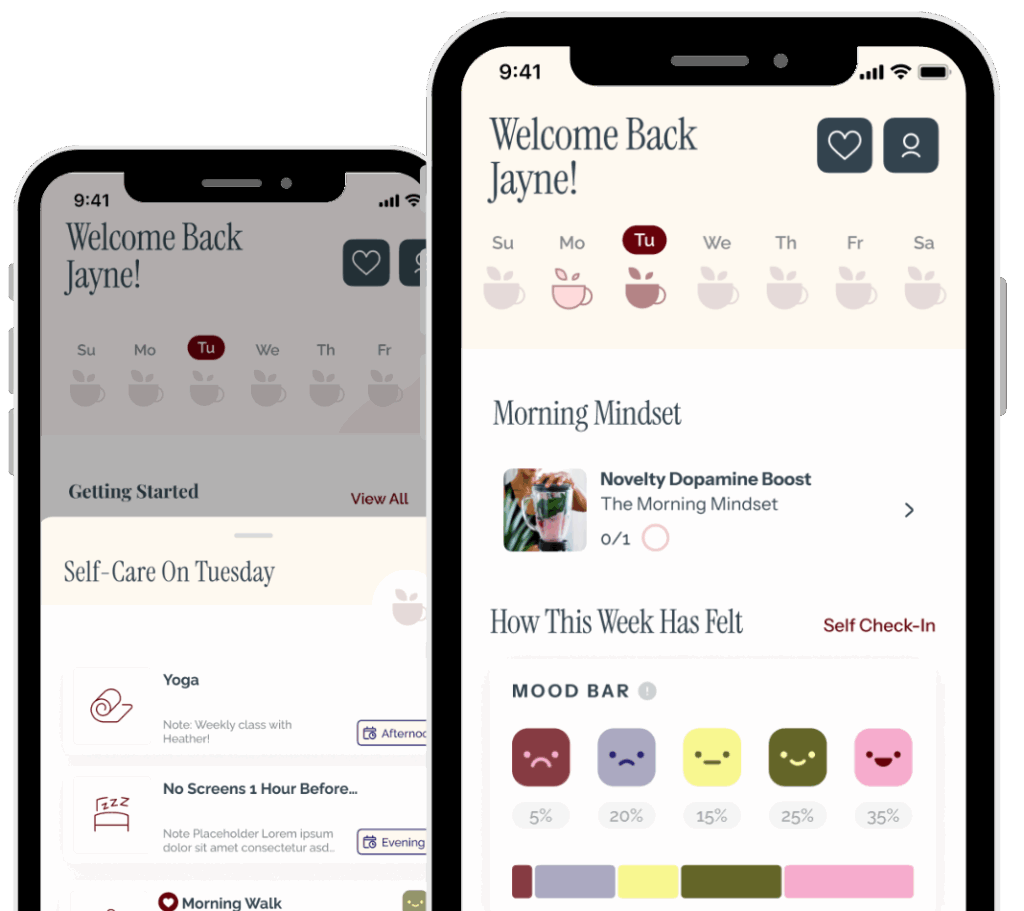
Download The Looli App
Make your wellness a priority, inside and out!
Start your free 7 day trial and access more tools, resources, content, recipes, workouts and more.
Article Written By: Colleen Christensen, R.D.

Colleen is a non-diet Registered Dietitian based in Grand Rapids, MI. She is the founder of the social media brand “No Food Rules” where she is committed to debunking diet culture and nutrition myths through relatable humor.
Follow Colleen on social media: