
How To Get A Brighter, Less Sensitive, Healthy Smile
Watch:
Listen:
We sat down with Dr. Jeff Heinz, orthodontist and owner of Heinz Orthodontics in Grand Rapids (Rockford + Kentwood), to get clear, practical answers to some of the most common dental questions we all think about — but rarely get explained in simple, real-world terms.
Dr. Heinz brings deep expertise to the table. He graduated from the University of Detroit Mercy Dental School, practiced general dentistry, then completed his Master’s degree in orthodontics at Indiana University. He has participated in clinical trials to improve braces and clear aligner technology, and he’s now expanding his practice by integrating facial aesthetic tools like Botox and dermal filler to elevate smile design and overall facial balance.
What we learned? There’s a big difference between what feels right, what looks nice, and what actually supports your long-term dental health.
Here’s a breakdown of the top takeaways from our talk — plus a Q&A pulled from the full conversation with Dr. Heinz.
Why Our Bites Change Over Time
As we age, our bite can naturally shift. That change doesn’t always come with pain or obvious symptoms — sometimes all you notice are tiny flat spots on the teeth or that your bite just doesn’t feel the same.
When the bite becomes less balanced (what Dr. Heinz calls “dysharmony”), the body often responds with protective habits like grinding or clenching. In the past, this may have served a purpose. Today, it can lead to excessive wear, jaw tension, headaches, or sensitivity — even if you don’t feel pain at first.
Modern orthodontics can help correct these imbalances before they become bigger concerns.
Dentist vs. Orthodontist: What’s the Difference?
Your dentist’s role is foundational: they monitor overall oral health, clean your teeth, and refer you for specialized care when needed.
An orthodontist specializes in aligning teeth and optimizing bites. This matters because tooth movement isn’t just cosmetic — how your teeth come together affects jaw comfort, function, and long-term dental health.
Think of your dentist as the quarterback of your dental team, and your orthodontist as the specialist who comes in when the play calls for precision alignment.
The Deal With Remote/Mail-In Aligners
At-home aligner programs may seem like a quick, affordable fix — but Dr. Heinz cautions that they often skip important steps like X-rays, in-person evaluation, and comprehensive treatment planning.
That convenience can feel great in the moment — but moving teeth without full diagnostics and professional oversight carries a real risk of unintended consequences.
If you’re considering orthodontic work, be sure it includes a thorough evaluation and monitoring by a trained specialist.
What Works — and Doesn’t — for Whitening
There are a few reliable whitening options:
- In-office whitening provides faster, supervised results.
- At-home gel trays and strip systems are effective but take longer.
- Most over-the-counter products are similar in results — just be patient.
The biggest limiting factor with whitening isn’t whether it can whiten — it’s sensitivity. Stronger products and techniques don’t always yield better results, and they can make your teeth more sensitive if used too aggressively.
Managing Sensitivity the Smart Way
To help with sensitivity:
- Use desensitizing toothpaste like Sensodyne consistently as your regular toothpaste while brushing. It works by gently blocking microscopic channels in the teeth that transmit sensation.
- Avoid abrasive DIY methods like charcoal, straight baking soda, or harsh scrubbing — they can wear enamel and worsen sensitivity.
What Is “Normal” Tooth Color
Natural teeth come in a range of shades — and very few are ultra-white.
Surface stains from coffee, tea, wine, and other foods/drinks are normal. True, free-floating white teeth exist — but stark white isn’t the only marker of health. Overly white crowns or veneers can look artificial if the translucency and tone aren’t balanced correctly.
Aesthetic dentistry thrives on natural harmony, not fluorescent perfection.
Everyday Habits That Impact Your Teeth
Here’s a simple way to think about it: it’s less about eliminating foods and more about how you consume them.
Constant sipping of sugary or acidic drinks means your teeth are bathed in acid longer — and that’s how cavities start. Saliva helps buffer acid, but continual exposure can tip the scale toward decay.
This doesn’t mean no smoothies or coffee — it just means being mindful of how long your teeth are exposed to sugar.
When Orthodontics Meets Facial Aesthetics
Because orthodontists deeply understand jaw and facial muscles, they’re uniquely positioned to offer treatments like Botox and filler for functional and aesthetic purposes.
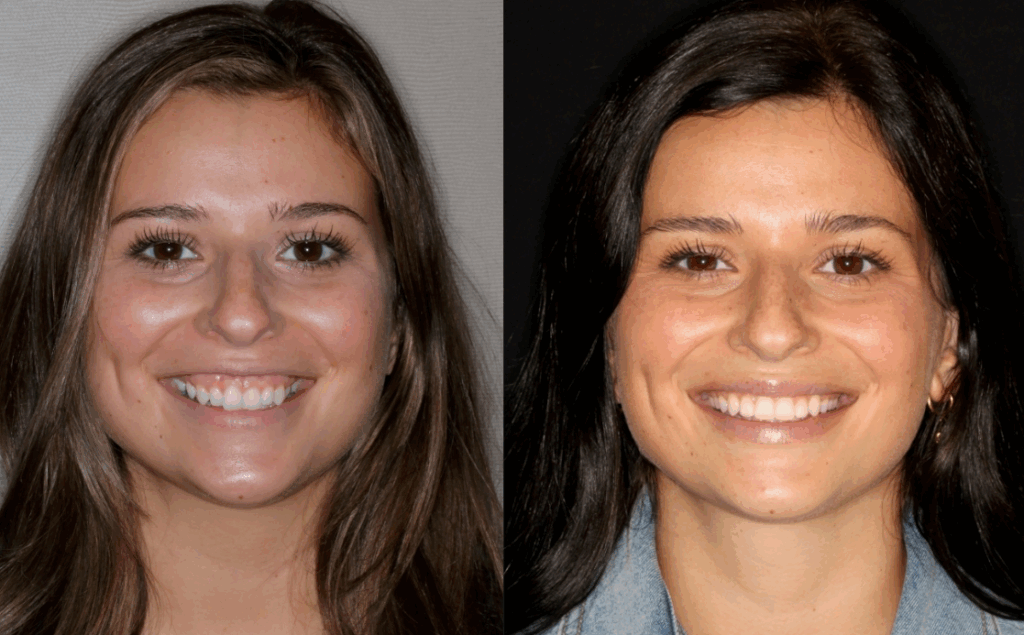
Botox can help with jaw tension and clenching. Filler can support smile design — softening areas where teeth and gums have changed due to alignment or recession. The focus is on balanced, natural enhancements that support function as well as appearance.
Q&A: Your Top Questions, Listed
- What are your thoughts on banana peel teeth whitening?
- How is this a thing lollll?
- What are some (or are there any) solid sensitive teeth home remedies you recommend?
- What are common causes of yellow teeth?
- What is a healthy teeth color? Is stark white a natural healthy color, or are we achieving a beauty standard?
- What are some ways to get rid of yellow teeth? Different whitening options, home remedies, etc.?
- Any recommendations for food for healthy teeth and gums?
Teeth, smiles, and bites are more interconnected with overall health and comfort than most of us realize. Getting questions answered in approachable, science-backed ways — without fear or fad trends — helps you make choices that feel good and last.
If this sparked curiosity, grab the full conversation with Dr. Heinz — there’s even more practical insight waiting there.
Download The Looli App
Make your wellness a priority, inside and out!
Start your free 7 day trial and access more tools, resources, content, recipes, workouts and more.