
A Day in the Life of: James Cappola
Watch:
Listen:
“My biggest goal is to be a strong, mobile, fast unit. If my body changes, so be it.”
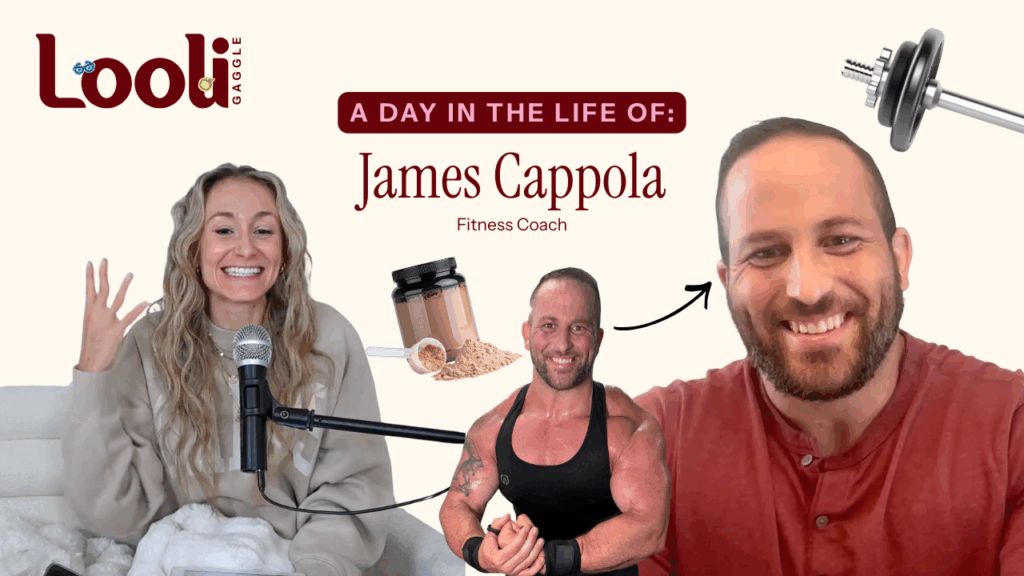
James Cappola is an online fitness coach with nearly 20 years of experience and a degree in exercise science from Manhattan College. He’s also someone who’s lived through severe body dysmorphia, multiple eating disorders, and the most toxic corners of diet culture — even while working in gyms and building a career in fitness. Today, he co-owns Zero Shortcuts Fitness Training with his wife, with a mission centered on helping people reach their goals while still having a life.
And while James might look like a big, intimidating gym guy at first glance, his routine is thoughtful, flexible, and surprisingly grounded.
Morning Routine
James wakes up and starts his day with a solid breakfast — something simple, consistent, and fueling. Keeping mornings predictable helps him feel ready to train without overthinking food first thing.
Before his workout, he takes a non-stimulant pre-workout (Gorilla Mode). For him, it’s about the helpful boost but also about flipping the mental switch — once he takes it, he’s committed to getting the workout done.
He trains most mornings, lifting weights about four days per week and adding cardio two days per week. His focus is on performance: getting stronger, moving better, recovering well, and feeling capable in his body. After training, he heads out for a walk with his dog.
Supplement-wise, James keeps things simple. He takes creatine monohydrate daily, which is well-supported for strength, performance, and recovery. He also uses topical testosterone replacement therapy (TRT) under medical supervision after years of eating disorders impacted his hormone levels — something he’s open about to help reduce stigma around medical support.
Mid-Day Flow
Once work starts, James is usually deep in client programming, check-ins, and content creation. With ADHD, it’s easy for hours to fly by, so he makes a point to pause and eat instead of pushing through.
Lunch is often a salad with a solid protein source (as well as carb and fat) — something satisfying that keeps him full and focused through the afternoon. Eating regularly helps him stay grounded and prevents the crash-and-burn cycle he used to fall into when he ignored hunger.
Throughout the day, James aims for around 200–220 grams of protein and about 30 grams of fiber. These numbers aren’t about chasing leanness — they’re what help him recover from his workload, feel satisfied, and stay energized.
Protein and fiber come first for him, then everything else fills in naturally. He eats carbs he enjoys, includes indulgences, and stops before feeling overly full. He hasn’t felt food guilt in years.
“I look at it as what I need to recover with my workload. It has nothing to do with being skinnier or leaner — it’s just what helps my body function.”
Movement doesn’t stop with workouts. James usually lands around 10,000–12,000 steps per day, not because he’s chasing a number, but because it feels like the right balance between sitting and moving. If he notices stiffness or restlessness, he gets up and walks.
Evening Wind Down
Dinner is where James really slows down. It’s his time to cook, put music on, decompress and “vibe out”. What he makes depends on what sounds good that day. Cooking looks different to his today than it did when he was struggling with food. Now, he takes pride in what he cooks instead of throwing together egg whites and zucchini.
He typically has red meat about once a week, seafood around twice a week, and poultry the rest of the time.
James is also intentional about putting his phone away. Spending time with his wife, his daughter, and just being present helps him ground himself, especially on days when his mind is racing or work stress creeps in.
Later in the evening, he takes a magnesium supplement to support sleep.
Why Jame’s Routine Works
James’s routine works because it’s built around function, not fixation. Movement that supports his body, food that helps him recover, and habits that keep him grounded in real life — not chasing an aesthetic or following rigid rules.
What stands out most is how much trust he’s rebuilt with himself. Training isn’t punishment. Food isn’t something to “earn.” Walking, cooking, and even putting his phone away are all part of his wellness — not add-ons he has to optimize or perfect.
It’s a reminder that a solid wellness routine doesn’t have to be extreme to be effective. It just has to support the life you’re actually living — and be something you can come back to day after day.
Looking For More?
If you want to go deeper with James, we also recorded an extended episode where we zoom out from his daily routine and talk more practically about training, nutrition, and sustainability.
In the extended conversation, we cover:
- Exercises and movement patterns he believes most people should be doing — and why they matter long-term
- His favorite ways to do cardio that don’t feel miserable or forced
- Walking: whether it’s “enough,” what it actually does for your body, and why it’s so underrated
- What really makes a home workout effective (and what doesn’t matter as much as people think)
- How to stay consistent and motivated with home workouts when life gets busy
- His go-to protein powder recommendations, plus runner-ups and what to look for depending on your needs
- The biggest differences he sees when training men vs. women
- How he responds to the fear of “getting bulky” from lifting weights
- His favorite protein bars and powders — and why he actually likes them, not just what’s popular
If you’re someone who wants realistic, no-nonsense guidance that works in real life — especially if you’ve been burned by extreme fitness advice in the past — the extended episode is for you.
Follow James On: Instagram, YouTube, TikTok
Download The Looli App
Make your wellness a priority, inside and out!
Start your free 7 day trial and access more tools, resources, content, recipes, workouts and more.