

How to Make Your Habits Stick in 2026
A new year is the perfect time to try building new habits, but let’s face it, most resolutions don’t last. That’s not because you’re lazy or unmotivated; it’s because creating lasting change takes more than willpower or a quick burst of enthusiasm.

The good news? You can set yourself up for success in 2026 by focusing on a few simple, science-backed strategies. In this post, we’ll cover three key steps to make your habits stick: assessing where you’re at, adding one habit at a time, and building supporting systems that keep you consistent so your resolutions actually last.
Step 1: Assess Where You’re At
One of the biggest reasons habits fail is that people focus on what they think they should be doing, rather than what actually fits their current life, energy, and routines.
Habits don’t exist in a vacuum, they’re shaped by stress levels, sleep, time constraints, and existing routines. Behaviors are more likely to stick when they align with your current context rather than requiring constant conscious effort. Taking time to assess where you’re starting allows you to choose a habit that creates momentum instead of friction.
This step isn’t about doing more, it’s about choosing the right first habit so your effort actually pays off. To make this easier, our Habit Helper Handbok PDF guides you through evaluation and habit ideas.
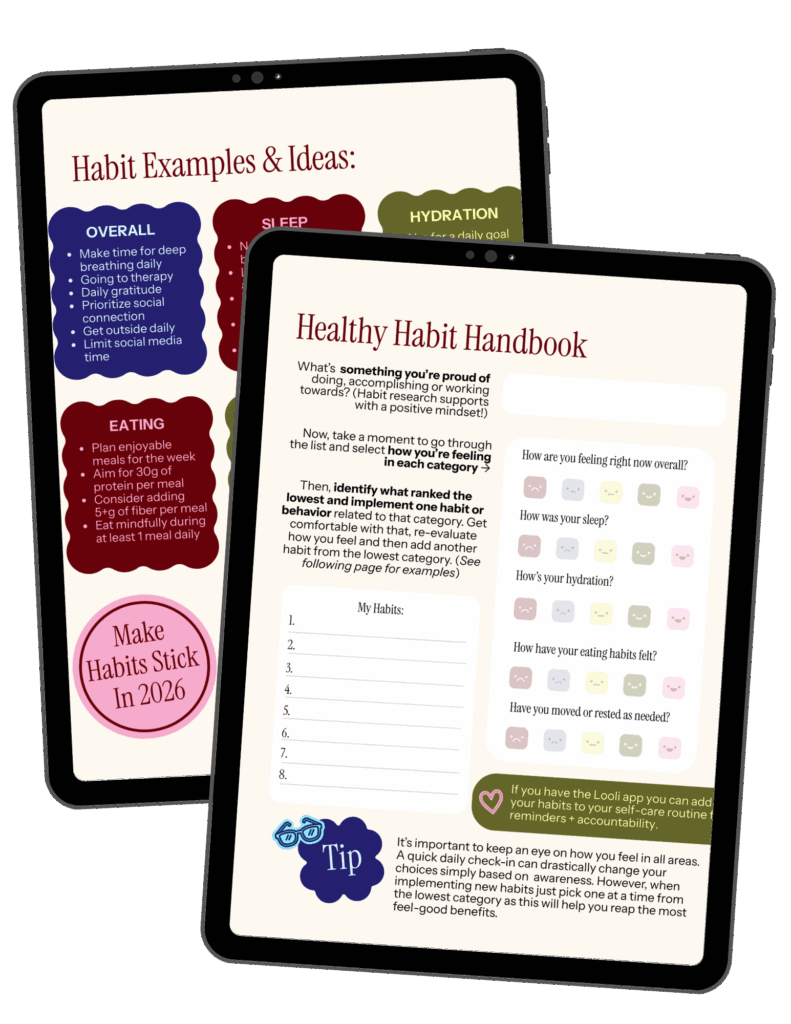
Healthy Habit Handbook
Strict rules don’t work, healthy habits do.
Enter your email below to snag our simple guide to creating stress-free self-care systems that stick. We’ll also send you an invite to join Healthy Habit Week from Dec 29-Jan 2 where our team of experts will teach you everything you need to know for a year of success!
Step 2: Focus on Adding One Habit at a Time
It’s tempting to overhaul multiple areas of your life at once, new workouts, new eating habits, earlier bedtimes, but research shows that behavior change is most successful when people focus on one habit at a time. A review found that concentrating on a single behavior increases the likelihood it becomes consistent and automatic.
By focusing on one habit at a time, you give yourself the mental bandwidth to establish consistency and automaticity. Once the first habit feels stable, you can layer in a second habit, gradually building a routine without burnout. This slow, step-by-step approach aligns with studies on behavior change, which emphasize that incremental, sequential habit formation is more sustainable than attempting complex routines all at once.

Step 3: Focus on Systems, Not Outcomes
Once you’ve chosen one habit to focus on, the next key is to build systems that make it easy to follow through. Research consistently shows that people are more successful when they create environments and routines that support behavior, rather than relying solely on motivation or trying to chase outcomes.
Supporting Systems That Help Habits Stick:
- Visual cues: Placing reminders or objects in your environment can trigger the behavior automatically.
- Environment design: Make the desired behavior easier and the undesired behavior harder (e.g., place your workout clothes in eyesight, have easy grab-and-go nourishing snacks available, using apps to support your habits, etc.).
- Tracking & feedback: Recording progress helps make habits tangible and measurable. But there’s a fine line, tracking should increase awareness, not shame. Our app uses a feelings-based approach, letting you “check off” habits even if you didn’t fully complete them by reflecting on how doing (or not doing) them made you feel.
- Accountability & social support: Sharing goals with a friend or community increases follow-through. (Looking for a community? Click here to join Looli’s free group)
Free Tools To Support Your Habits:
- Habit Helper Handbook (Free): evaluation, habit ideas, and system prompts
- Free Facebook Group: accountability and encouragement
- Looli App (Free 7 trial): daily self-care routines, feelings-based trackers, meal planning, and journaling to help embed habits into your life
By focusing on systems, habits become automatic parts of your day. Motivation helps, but it isn’t the foundation — your systems are.

The Science of Habit Timelines
One of the biggest reasons habits fail is expecting results too quickly. The “21-day habit” myth has been debunked by research: habits take much longer to become automatic, and the timeline varies depending on the behavior and individual. A study found that, on average, it takes about 66 days for a new behavior to feel automatic, with a range of 18 to 254 days depending on complexity and context.
Consistency matters far more than speed. Simple behaviors, like drinking water after breakfast, may take less time to stick, while complex behaviors, like exercising or meal planning, often take months. By understanding these realistic timelines, you can approach habit change in 2026 with patience, reduce frustration, and focus on building systems that support long-term success rather than chasing quick wins.
Putting It All Together: A Sustainable Path to 2026 Habit Success
Habits stick when they fit your life, your energy, and your routines. Start by assessing where you’re at, choose one habit to focus on, and build systems that support it. Remember: habits take time to form — consistency and patience are far more important than quick results.
To help you get started, you have multiple options for support:
- Habit Helper Handbook PDF (Free): guides you through evaluation, habit ideas, and system prompts
- Free Facebook Group: accountability, encouragement, and community support
- Looli App (Free trial): daily self-care routines, tracking, meal planning, and journaling
By taking small, deliberate steps and leaning on these systems, you’ll set yourself up for lasting success in 2026, one habit at a time.
Article Written By: Colleen Christensen, R.D.

Colleen is a non-diet Registered Dietitian based in Grand Rapids, MI. She is the founder of the social media brand “No Food Rules” where she is committed to debunking diet culture and nutrition myths through relatable humor.
Follow Colleen on social media:
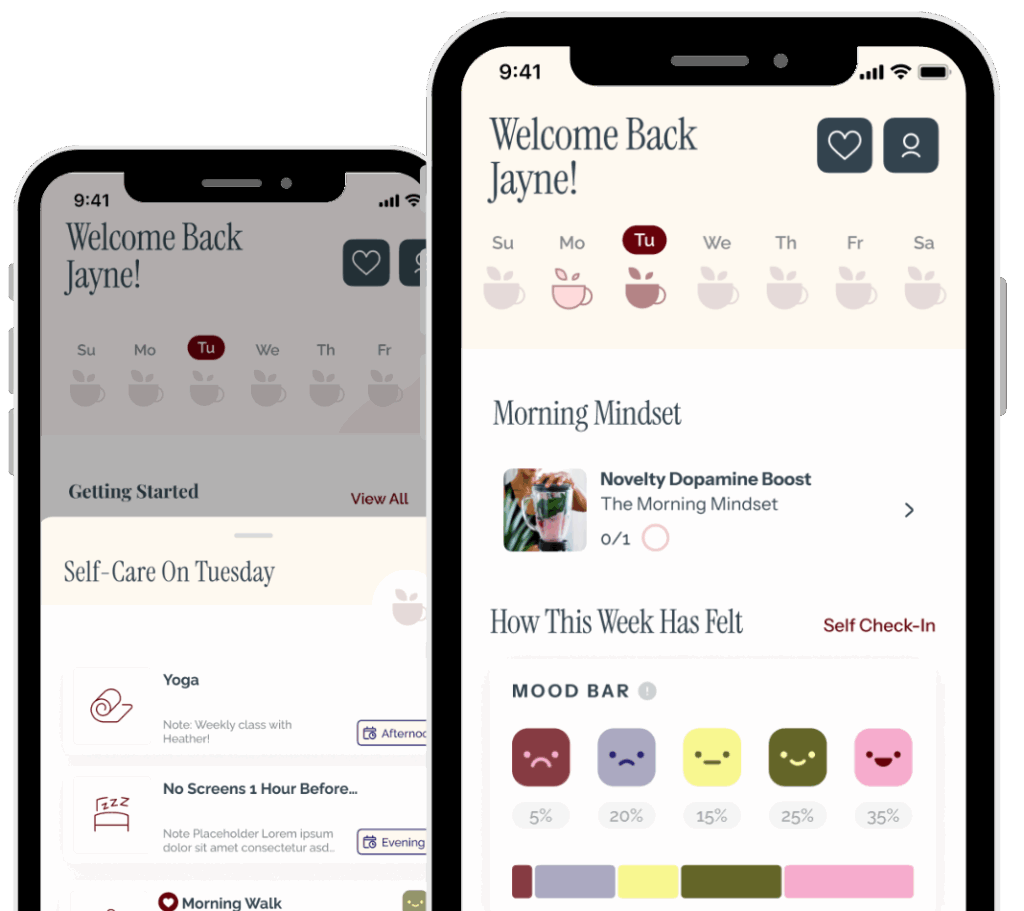
Download The Looli App
Make your wellness a priority, inside and out!
Start your free 7 day trial and access more tools, resources, content, recipes, workouts and more.