
Legs Up the Wall: A Quick Stress-Relief Hack
Ever wish you could hit a “reset button” for your body after a long day of sitting, running errands, or staring at screens? Enter Legs Up the Wall (Viparita Karani), a simple, restorative yoga pose that’s basically the easiest way to give your nervous system and lower back a mini-vacation.
You don’t need fancy equipment, a gym membership, or the flexibility of a Cirque du Soleil performer. Just a wall, a mat, and 5–15 minutes is enough to start feeling a noticeable shift in how your body relaxes.

What is Legs Up the Wall (Viparita Karani)?
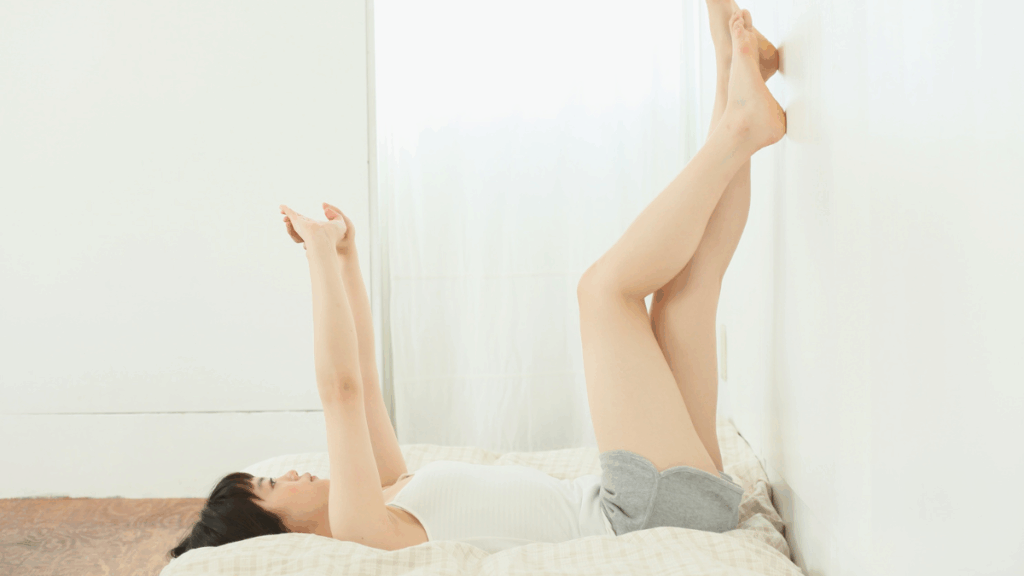
Legs Up the Wall, or Viparita Karani in yoga, is a restorative pose where you lie on your back with your legs extended vertically against a wall. Your buttocks sit close to the wall, letting gravity gently support your legs while you relax your upper body.
Unlike headstands or other inversions, this pose is gentle, accessible, and doesn’t require strength or advanced flexibility. It’s often used in yoga and physical therapy to promote relaxation and ease tension. Studies on this posture and similar restorative inversions have shown measurable effects on stress reduction, nervous system calming, and mild relief of lower back tension, making it a popular choice for both beginners and experienced practitioners.

Find Your Perfect Workout

Benefits of Legs Up the Wall (Viparita Karani)
Calms the Nervous System and Reduces Heart Rate
Legs Up the Wall helps the body shift into a parasympathetic, “rest-and-digest” state, which is linked to reduced stress and a calmer mind. When you lie on your back with your legs elevated, heart rate naturally slows, signaling the nervous system to relax.
Research on restorative yoga and similar passive postures shows that this can increase heart rate variability (HRV), a reliable marker of parasympathetic activation and improved stress regulation.
Supports Circulation and Relieves Leg Fatigue
Elevating the legs above heart level helps gravity assist blood flow back toward the heart, which can ease swelling and discomfort in the lower legs. This is the same principle studied in passive leg raising (PLR), which temporarily enhances venous return and supports circulation.
Practically speaking, even a short session of 5–10 minutes can make tired legs feel lighter and more comfortable after long periods of sitting or standing.
Relieves Lower Back and Muscle Tension
Resting on the floor with legs elevated gently unloads the lower back, taking pressure off spinal muscles and allowing them to relax. While direct studies on Viparita Karani are limited, research on restorative yoga shows that gravity-assisted, supported postures can help reduce muscular tension and improve overall comfort.
Encourages Relaxation and Stress Reduction
Because this posture slows the heart rate, supports circulation, and relaxes muscles, it naturally promotes a state of deep relaxation. Yoga and other restorative mind-body practices have been shown to improve autonomic function and reduce perceived stress, making this posture a simple yet effective way to unwind and feel more centered.
How to Do Legs Up the Wall (Viparita Karani)
Setup and Props
Start by finding a wall and a comfortable surface, like a yoga mat, carpet, or folded blanket. If your lower back is sensitive, you can place a small pillow or folded blanket under your hips. This slightly lifts the pelvis and allows your legs to rest vertically with minimal strain, making the posture more comfortable and fully supportive.
Getting Into the Pose
Sit sideways next to the wall, with one hip close to it. Gently lie back and swing your legs up the wall so that your buttocks are right against or slightly away from the wall. Rest your arms by your sides or on your belly — whichever feels most relaxing. Move slowly to avoid overstretching your hamstrings or straining your lower back. The goal is to let gravity support your legs so the body can fully relax.
Duration and Timing
Most people start with 5–10 minutes per session, which is sufficient to feel calming and restorative effects. As comfort allows, you can extend the pose to 10–15 minutes. Take your time coming out: bend your knees, roll to one side, and gently press yourself up to sitting to avoid dizziness or lightheadedness.
Frequency Based on Evidence
- Leg and circulation benefits: Even a single 5–10 minute session can help improve venous return and ease leg fatigue.
- Nervous system and stress benefits: To support parasympathetic activation and reduce stress, 2–3 sessions per week of 10–15 minutes each aligns with frequencies used in yoga studies that showed improvements in heart rate variability and stress reduction.
Modifications for Comfort
If your hamstrings are tight or your lower back feels strained, move your hips slightly away from the wall or place a pillow under your sacrum. For extra support, a rolled-up blanket under your knees or a bolster under your hips can help. Small adjustments can make the posture more accessible and allow you to stay in it longer, maximizing both relaxation and recovery benefits.

Who Should Take Caution / Modifications
Legs Up the Wall is generally safe, but a few groups may need to modify the pose or consult a professional first:
- Pregnancy: Place extra support under the hips and avoid lying completely flat if it feels uncomfortable.
- Glaucoma or certain eye conditions: Inversions can temporarily increase eye pressure, so check with a doctor.
- Recent surgery or severe back/hip injuries: Get guidance from a healthcare provider before trying the pose.
For most people, small adjustments — like placing a pillow under the hips, a rolled blanket under the knees, or moving slightly away from the wall — make the pose more comfortable and let you enjoy the calming and restorative effects safely.
Always speak with your doctor before starting any new program or exercise, including restorative yoga poses like Legs Up the Wall.
The Bottom Line
Legs Up the Wall (Viparita Karani) is a simple, accessible posture that can calm the nervous system, support circulation, and ease lower back and leg tension. Even a few minutes a day can provide noticeable relaxation, while 2–3 sessions per week can help reduce stress and improve overall autonomic balance.
Whether you want to unwind after a long day, support recovery after standing or exercise, or give your mind and body a moment to reset, this pose is a gentle, evidence-informed option. With small modifications and attention to comfort, most people can enjoy its benefits safely.
Remember, always speak with your doctor before starting any new program or exercise, and listen to your body — the goal is relaxation, not strain. Legs Up the Wall is one of those rare practices that’s easy to do, low-risk, and incredibly restorative, making it a great addition to your wellness routine.
Article Written By: Colleen Christensen, R.D.

Colleen is a non-diet Registered Dietitian based in Grand Rapids, MI. She is the founder of the social media brand “No Food Rules” where she is committed to debunking diet culture and nutrition myths through relatable humor.
Follow Colleen on social media:

Free Meal Planning Guide
Not sure where or how to get started? Leave it to us!
Enter your email below and we’ll send you our balanced meal planning guide plus a full done-for-you plan.