
7 Ways To Save Money on Groceries
Nearly 69% of U.S. adults say that higher food prices make eating healthy more difficult — and that stress shows up at the grocery store every week. But while food costs are rising, there are practical, research-backed ways to make your dollar go further without sacrificing variety, satisfaction, or flexibility.
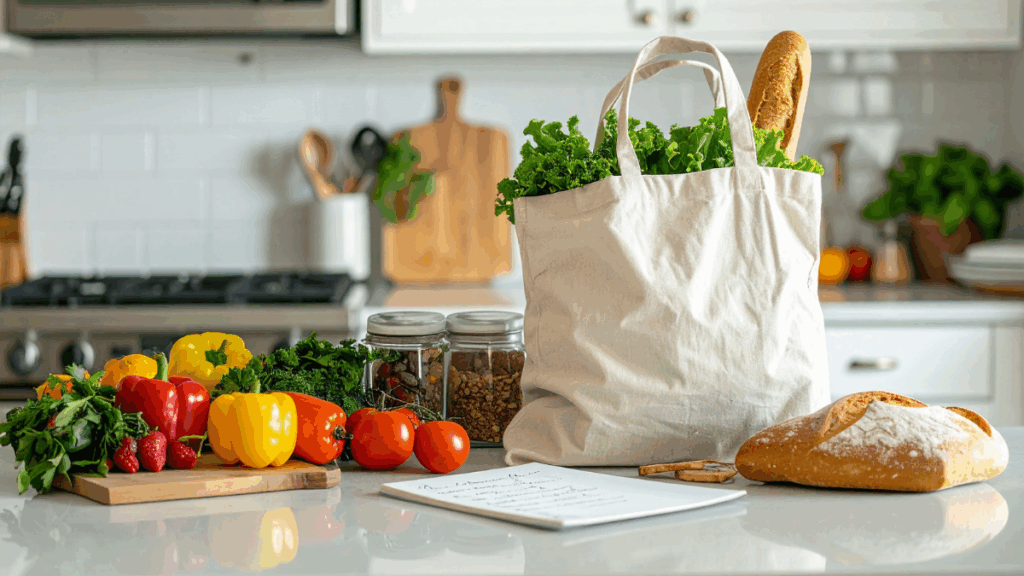
Here’s how to save on groceries in ways that are realistic, enjoyable, and easy.
1. Planning Ahead Makes A Huge Difference
Scientific research shows that planning meals in advance can help households save money and improve diet quality. People who plan meals are more likely to stick to nutritional guidelines and have greater variety in their diet. Some practical guides suggest up to ~30% savings on grocery bills when meal planning and budgeting are used together because less food goes unused and big-picture budgeting is easier to execute.
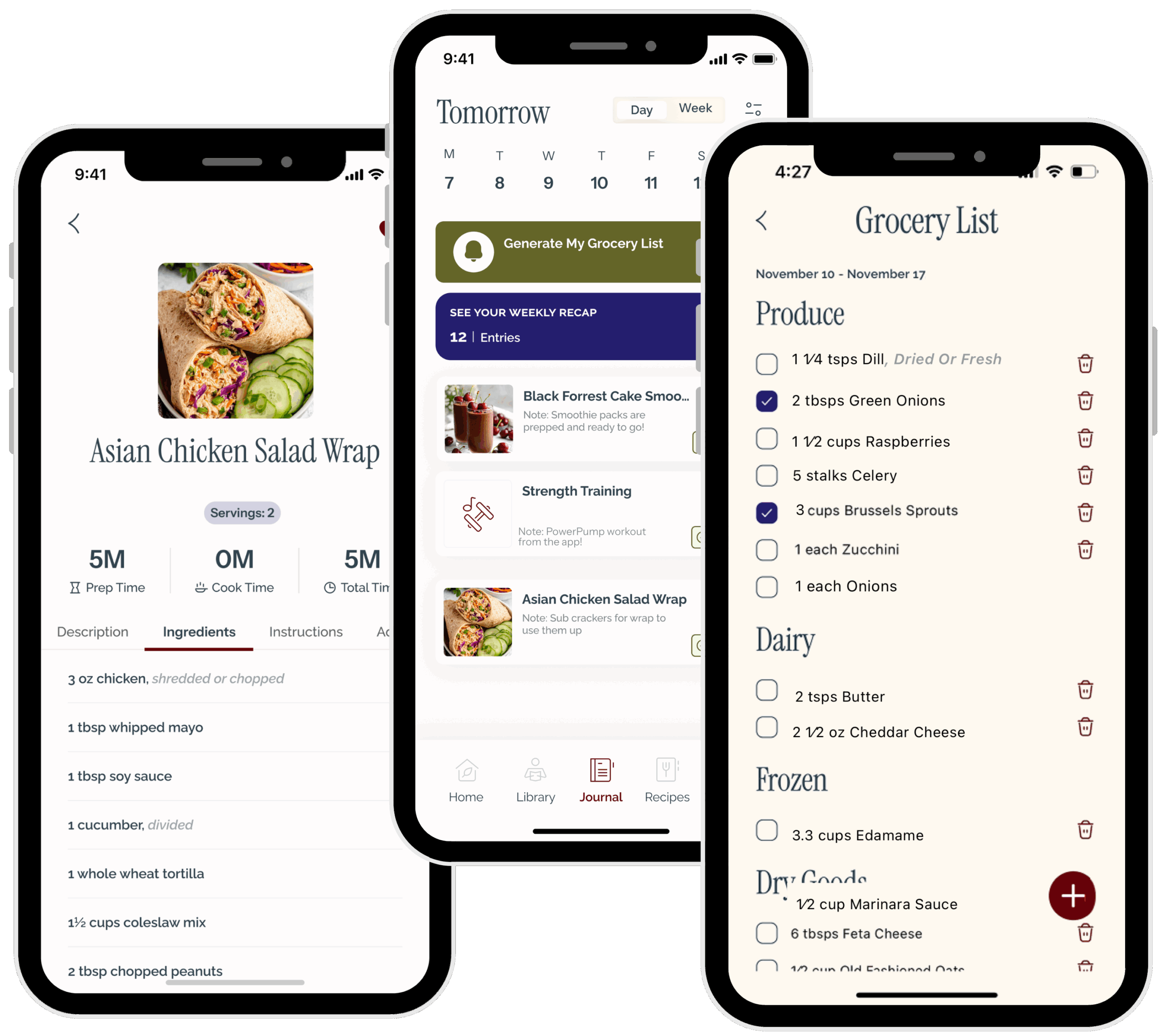
Using a notebook, a whiteboard, or a meal planning app with grocery list generator like Looli’s (click here to give it a try) can make these savings actionable and sustainable.
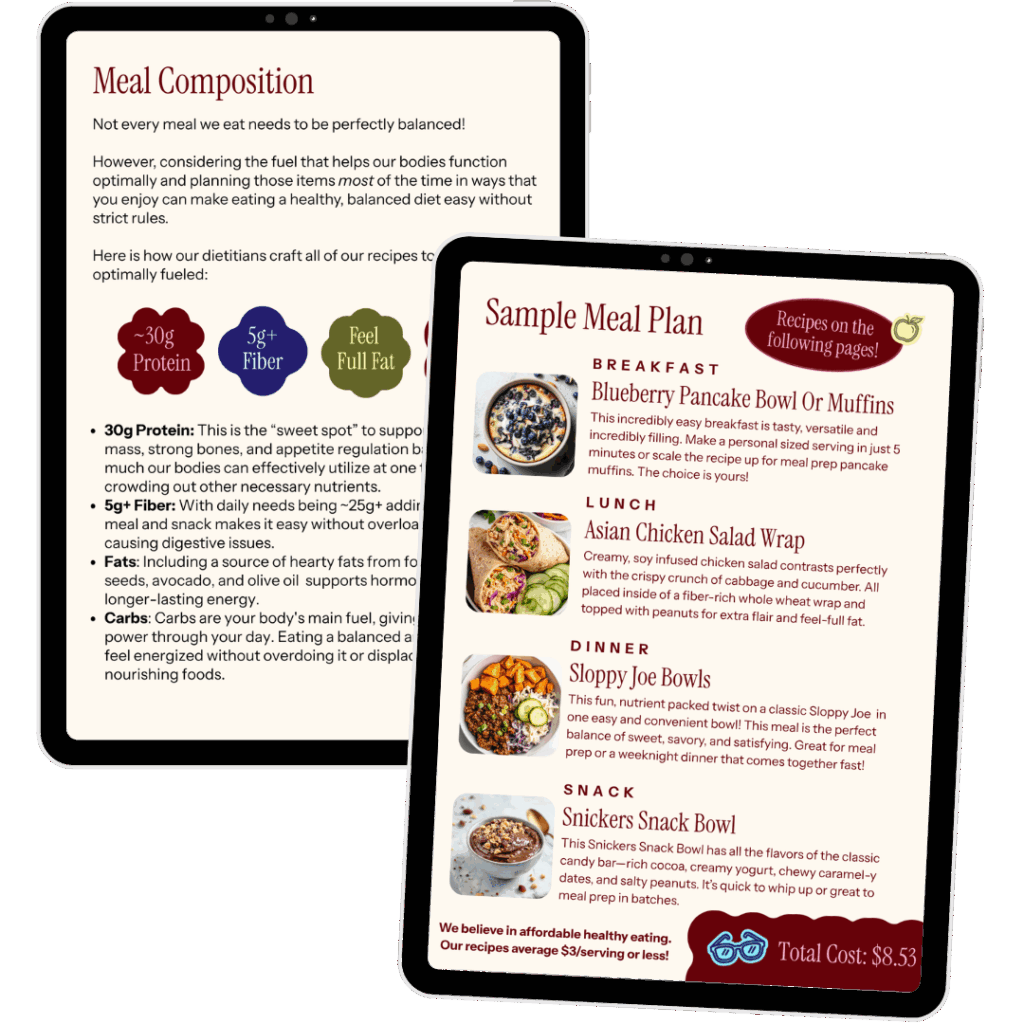
Free Meal Planning Guide
Not sure where or how to get started? Leave it to us!
Enter your email below and we’ll send you our balanced meal planning guide plus a full done-for-you plan.
2. Start with What You Already Have
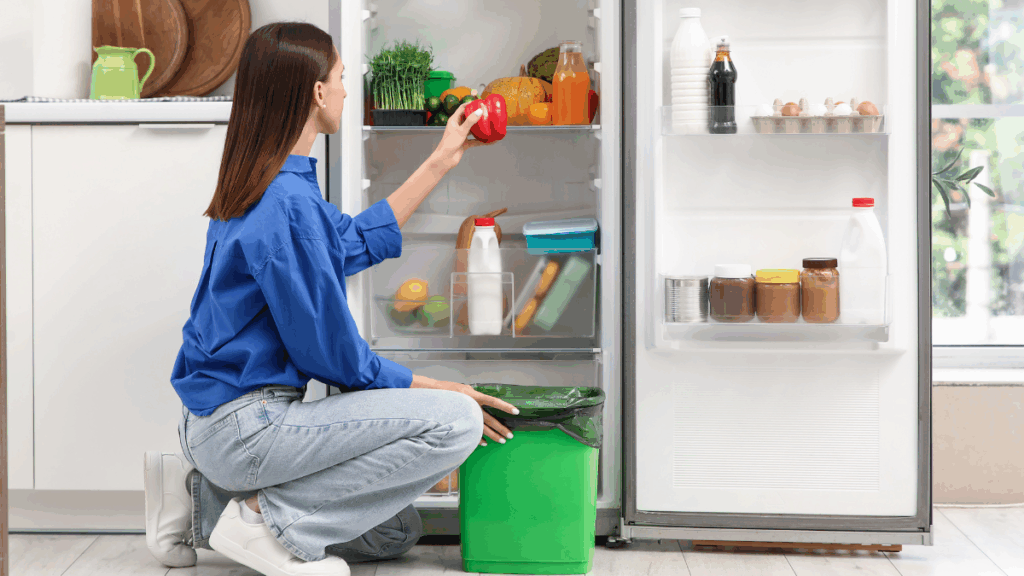
One of the most impactful ways to save is to begin by using what you already have in your fridge, freezer, or pantry. When you plan meals around ingredients already on hand, you reduce food waste — and wasted food is literally money thrown away.
Registered Dietitian Giselle Bouvier of @nourish.con.gisela recommends leveraging tools like AI or apps to help you come up with meal ideas when you have just a few ingredients left “Use AI by inputting the food you have to help you come up with meal ideas.”
This simple habit helps you create meals that avoid unnecessary purchases, which is one of the biggest stealth drains on a grocery budget.
3. Frozen Produce: Cheaper and Nutritionally Solid
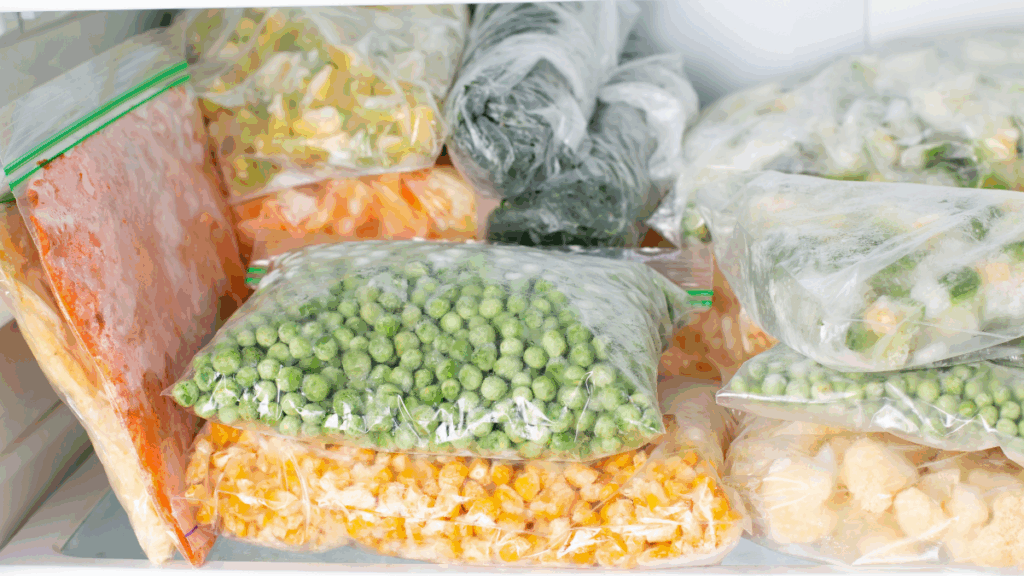
If fresh fruits or vegetables are out of season or pricey, frozen is a great alternative. Frozen produce is typically picked and flash-frozen at peak ripeness, preserving nutrients and extending shelf life — meaning you’re less likely to throw it out before you use it. Higher nutrient levels can be comparable to fresh when fresh has sat on a shelf for days.
Frozen options are often significantly cheaper: retailers and market analyses frequently show frozen vegetables costing 30–40% less per pound than fresh equivalents, and some frozen berries are 30% or more cheaper than fresh out-of-season berries.
As dietitian Melissa Altman-Traub notes: “If a fruit or vegetable is not in season, buy it frozen. They are usually frozen right as they turn ripe and are picked, and often cost less than produce that’s not in season.”
That means you can keep nutritional variety on your plate and reduce weekly grocery costs.
4. Be Ingredient-Savvy: Simple Meals Save Money
Complex ingredients and specialty items like sauces you use once or hard-to-find spices can inflate your grocery bill without adding much value to your meals. Our dietitians at Looli focus on keeping meals simple and versatile: focus on ingredients that can be reused across several meals. This strategy reduces waste, lowers cost per serving, and makes meal prep less overwhelming.
Here’s How Much Simple Meals Can Save You:
The average healthy meal costs about $7.50 per serving at home. Taking budget into consideration and cutting out unnecessary ingredients (like one-time-use spices) and simplifying meals, as we do here at Looli, can bring the cost down to as low as $2–$3 per serving — a savings of $5–$5.50 per meal. Over three meals per day, this adds up to roughly $6,000 per year per person.
Budget Friendly Recipes
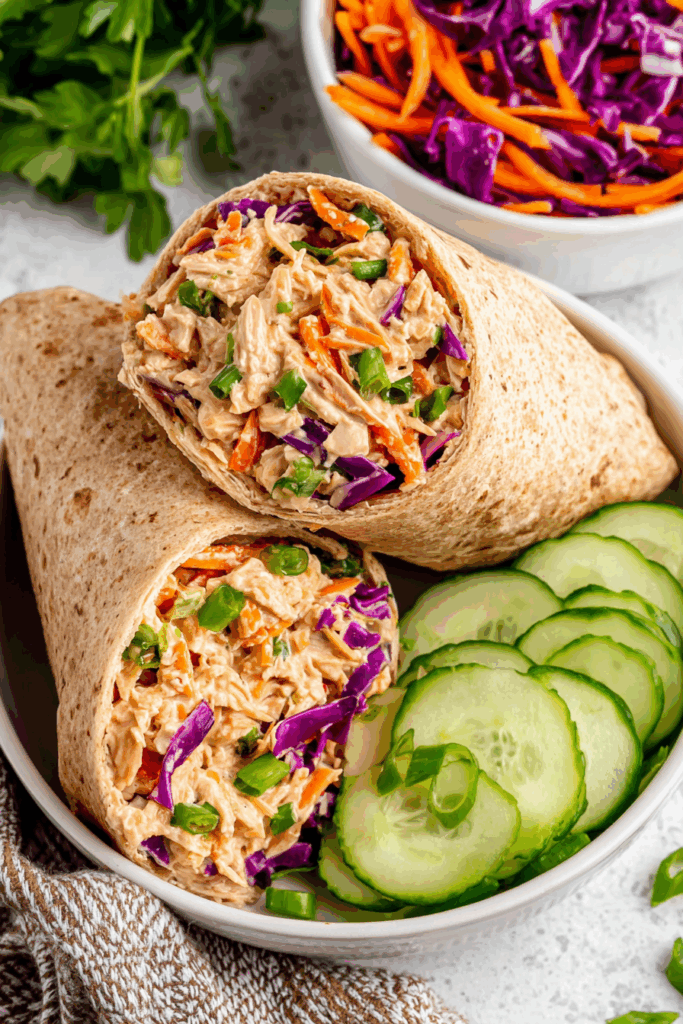
Don’t sacrifice nutrition for savings! All of Looli’s recipes provide high protein, high fiber, balanced nutrition while averaging $2-3 per serving (and are incredibly easy!).


5. Buy Bulk… With a Plan
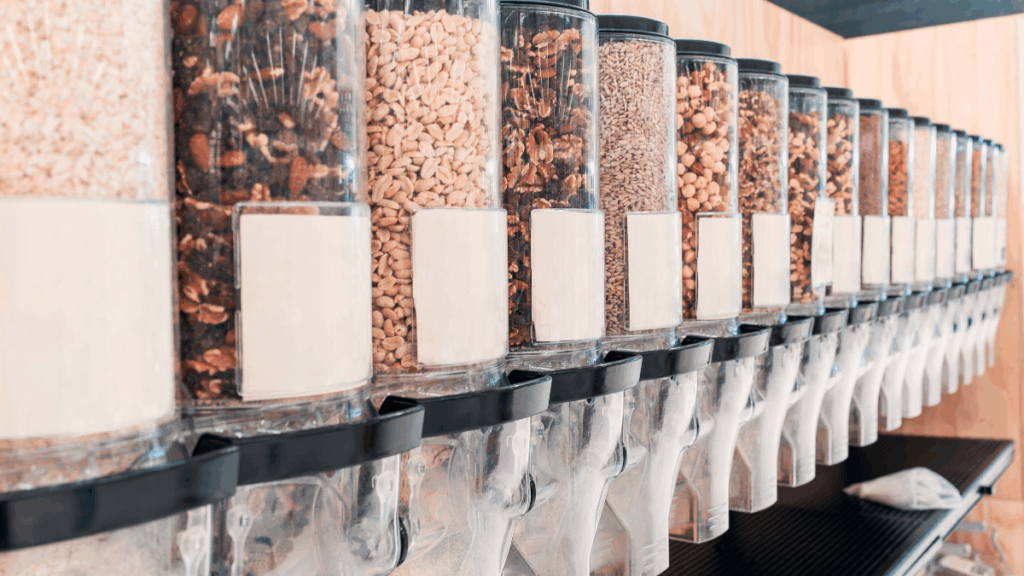
Buying in bulk can be a smart way to save, but only if you actually use the food before it expires. Large packages of staples like rice, beans, oats, or lentils can cost less per unit — but if half the bag spoils before you cook it, the savings disappear.
Dietitian Kate Reeder of Table Nutrition explains: “Sometimes buying in bulk doesn’t save you money especially if the things go to waste before you can use them or you never actually use them. Check the prices of bulk or larger size items. Often they are a better deal, but not always!”
Checking unit prices (cost per ounce or pound) — which many grocery apps and shelf tags now display — makes this quick and objective at checkout.
6. Plant-Based Meals Can Help Your Budget
Meat can be the most expensive item on many grocery lists. Shifting a few meals in a week toward plant-based proteins like lentils, beans, or tofu — especially when paired with vegetables on sale — often lowers the overall grocery bill.
Dietitian Becky Gradl suggests: “Meat is often the highest priced grocery item. Plan occasional meatless meals using lentils or legumes along with the vegetables that are on sale that week.”
Including plant-based meals doesn’t require eliminating meat entirely. Even a few budget-friendly, protein-rich vegetarian meals per week can lead to meaningful savings.
7. Meal Kits: Easy, Flexible, and Still Affordable
Cooking at home doesn’t have to be all-or-nothing — even if you’re new to cooking, services like Hungryroot (one of our team’s faves- which actually offers both meals and groceries) make it easy. Their meals range from $6–$12 per serving, which is within the $7.50 average cost of a typical home-cooked meal, but still higher than ultra-budget-friendly options like Looli’s $2–$3 per serving.
The key: meal kits offer convenience and structure without the steep cost of takeout, which often exceeds $20 per meal. They’re a helpful bridge for people learning to cook or who need inspiration — showing that you can still cook at home even if you don’t feel confident yet.
Cost Rundown:
- Budget Forward Meals (Like Looli’s recipe strategy): $2-3 per serving
- Average Home Cooked Healthy Meals: $7.50
- Meal Delivery Kits: $6-12 per serving (Or $3.60 when you click here and take 40% off your first HungryRoot order with our affiliate discount)
- Dining Out: $20

Click on any ingredient below with a link to learn more about that item including nutrition info, health benefits and similar ingredient swaps.
Enter your email to access our full nutrition library.
Get The Looli App
Putting It Into Practice
You don’t need to change everything overnight to start saving on groceries. Pick one tip that feels doable—whether it’s planning meals for the week, using what’s already in your fridge, or swapping in frozen vegetables—and try it for a week. Once that becomes a habit, add another tip. Over time, these small, intentional shifts can add up to big savings, less waste, and more stress-free cooking, all while still enjoying meals you love.
Article Written By: Colleen Christensen, R.D.

Colleen is a non-diet Registered Dietitian based in Grand Rapids, MI. She is the founder of the social media brand “No Food Rules” where she is committed to debunking diet culture and nutrition myths through relatable humor.
Follow Colleen on social media: